QUALITY OF LIFE
RESOURCE KIT

About the cover page
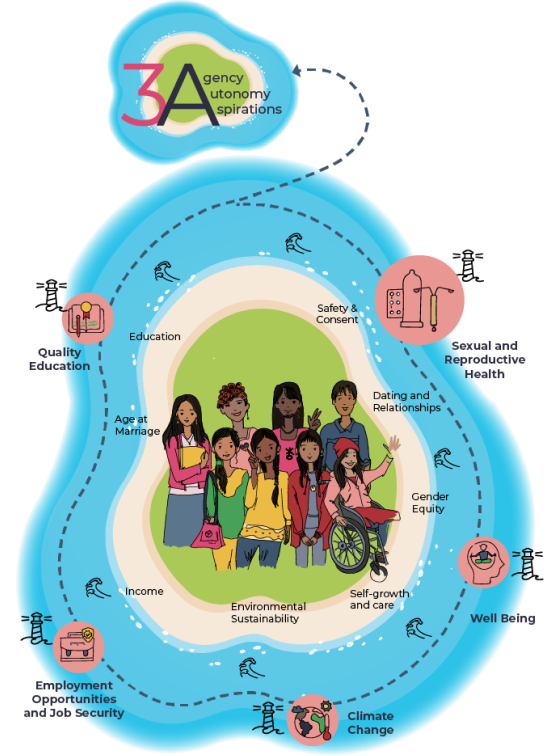
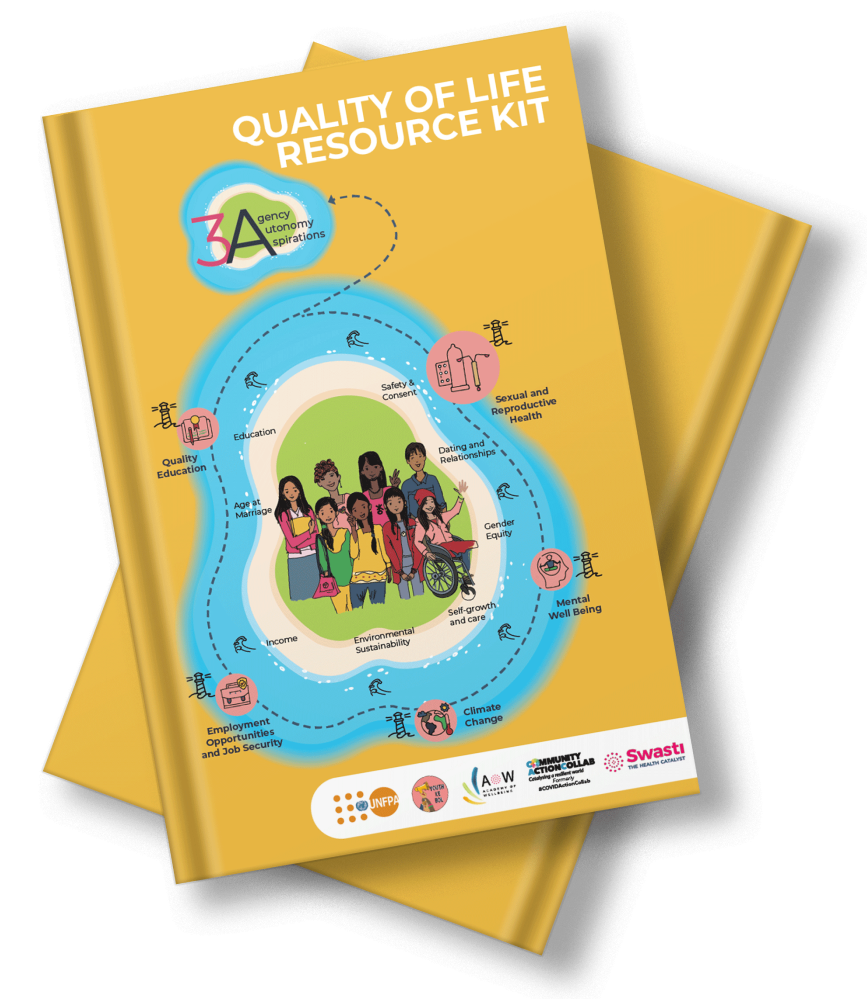
Our lives are different and personal, making it hard to figure out what affects our quality of life. We can group these factors into five categories — quality education, job security, sexual and reproductive health, mental well-being, and climate change. These categories often overlap and the link between them shows how they’re connected, with you at the centre.
Young People’s Quality of life can be described by three elements, the 3As: having control (agency), independence (autonomy), and chasing your dreams (aspirations). Everything in the five categories contributes to these three.
As you go through this resource kit, check for the 3As in different categories. Share your thoughts. Is there a possible 4th A? How else can we define quality of life for young people?
How’s life?
Start the Quality of Life resource kit honestly evaluating yourself. Before we begin with this Resource Kit, take a moment to reflect on your life experiences and get ready to bring positive change.. Consider this survey as your personal roadmap to a future full of knowledge and strength. So, how’s life?
Take the Quality of Life Survey


Purpose and Objective
The Quality of Life Resource Kit is a guide for youth advocates (aged 18 years and above) and practitioners who work with young people. The aim of this resource kit is to support youth advocates and practitioners in identifying prevalent issues, learn about relevant stakeholders and create an advocacy map to strategically engage in dialogue with them to ensure their needs are addressed.
This resource kit serves a dual purpose:
- It can be used by youth advocates or practitioners as a self-guided tool to create an advocacy roadmap.
- This resource kit comprises a facilitators’ guide which can be leveraged by youth advocates and practitioners to support and guide young individuals in comprehensively undertaking a need analysis on components affecting their Quality of Life and creating an advocacy map to strategically engage in a dialogue with stakeholders.
The resource kit focuses on five key domain areas: quality education, employment opportunities and job security, sexual and reproductive health, mental and psycho social well being, climate change and environmental sustainability. You can make the most of this resource kit to empower and guide young individuals in enhancing their quality of life. For effective implementation, utilise the facilitator’s guide linked in the QR code below to conduct insightful sessions and facilitate positive change in your community:
What can this resource kit help you with?
This “Quality Of Life” resource kit serves as an advocacy tool which guides you to identify quality of life for yourself and your community. The resource kit can be used by youth advocates and practitioners who work with young people to understand and identify the role of different factors affecting quality of life, to identify and reach out to different decision-makers and get your voices heard to improve your quality of life it. It empowers youth advocates to understand the interlinkages of various factors, make effective decisions, and engage decision-makers to bring about positive change..
How to Navigate the Resource Kit:
1. Understanding Quality of Life:
This resource kit guides you through the stories of five young individuals, each facing challenges in five key areas. These narratives provide a window into their experiences, allowing you to journey alongside them. Through interactive activities, you’ll explore the nuances of the decision-making process. These stories can be adapted to diverse contexts and settings reflecting lived experiences of young people.
2. Join the Dots:
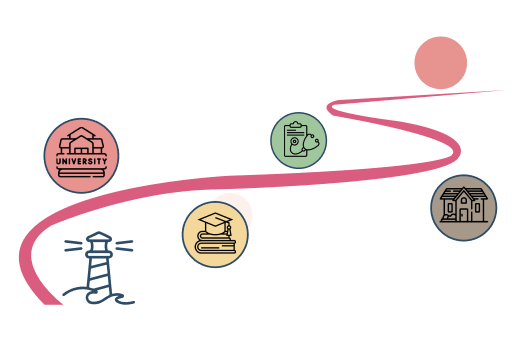
After developing an understanding of 5 key themes and factors impacting decision making processes, the resource kit dives into understanding the interconnectedness between all the elements for a young person’s quality of life. This includes interactive exercises and worksheets that serve as tools for enhancing your quality of life journey
So, what is quality of life?
This “Quality Of Life” resource kit serves as an advocacy tool which guides you to identify quality of life for yourself and your community. The resource kit can be used by youth advocates and practitioners who work with young people to understand and identify the role of different factors affecting quality of life, to identify and reach out to different decision-makers and get your voices heard to improve your quality of life it. It empowers youth advocates to understand the interlinkages of various factors, make effective decisions, and engage decision-makers to bring about positive change.
But what’s interesting is that everyone has a different definition of quality of life. What’s good for one person might not be the same for another. Quality of life is also interlinked to access and availability of resources and opportunities! For example: A person can have access to quality education but might not have access to a workplace that offers flexible working policies for women! Our life experiences are unique and are dependent on our identities: gender, age, caste, religion, sex, sexuality, geographical area, so even if two people seem similar, they won’t feel the exact same way about life. So, we can think of Quality of Life as a qualitative tool that helps us think about how presence or absence of certain factors can affect our lives.
Youth Ke Bol conducted several discussions with young people across India to understand the factors impacting their quality of life2. This resource kit is a product of the information shared by the youth and highlights five important factors identified by young people in these discussions, namely: quality education, employment opportunities and job security, mental health and pyscho-social well being, sexual and reproductive health, and climate change and environmental sustainability. These factors are interconnected with each other and affect their quality of life.
POSTER Elements of young people’s Quality of Life
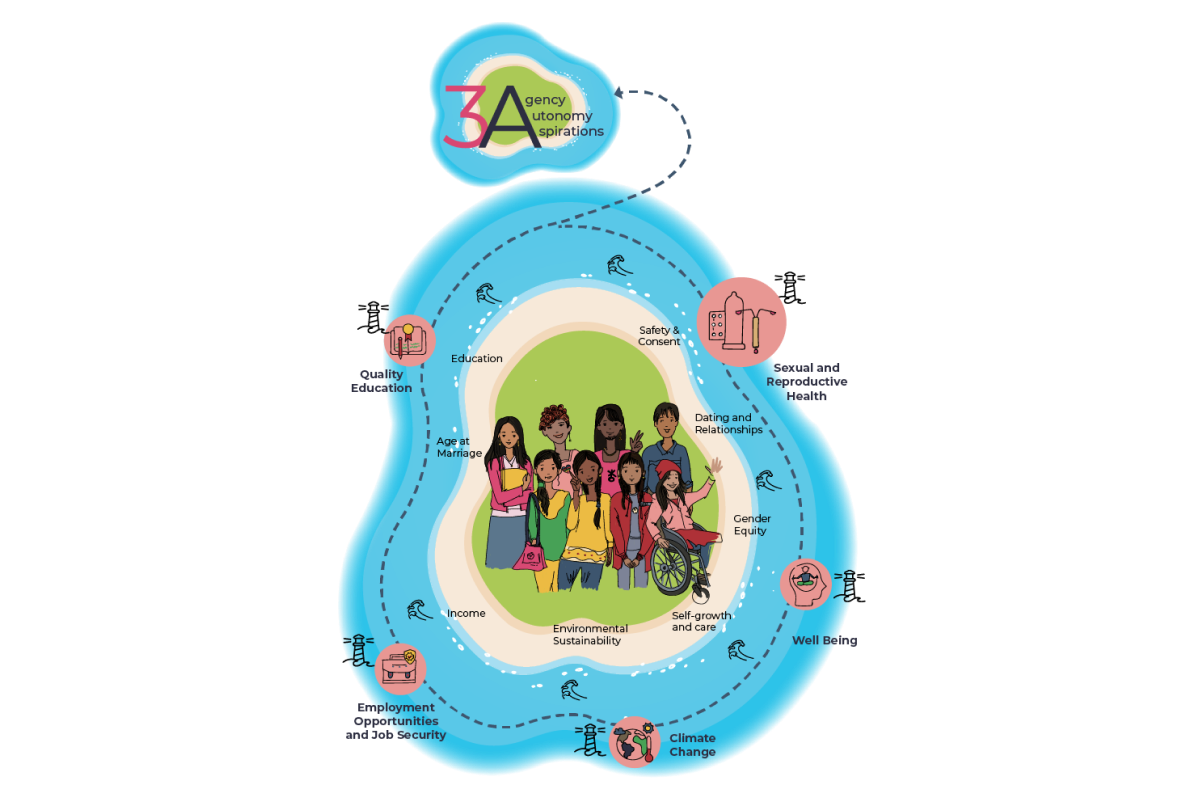
Quality education means a well- rounded learning experience that provides knowledge, skills, and values for everyone. It ensures fair access to resources, supports overall development, and addresses key factors like skills, gender equality, infrastructure, and teacher support.
Job security is the assurance of continuous employment without the threat of sudden termination, contributing to fair labor practices and improved quality of life
Climate change is the lasting changes in Earth's climate caused by human actions like burning fossil fuels. This affects ecosystems, weather, and sea levels, creating worldwide environmental, economic, and social issues.
Mental well-being is the ability to cope with stress, maintain relationships, and contribute to the community, involving resilience, self- esteem, and purpose.
Sexual and reproductive health (SRH) is a state of complete well-being in matters related to the reproductive system. It involves the right to make informed decisions about sexuality, reproduction, and family planning.